
By Rachel Nunn
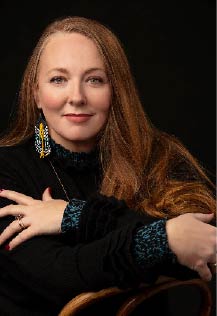
At 7 p.m., on Feb. 2, in Nance Boyer 2060, the Writer’s Studio hosted the semester’s first Visiting Writer event. Indigenous poet, entrepreneur and defender of the freedom to read, Heather Hall spoke about becoming a poet and the impacts her culture and community have had on her craft and life.
Hall owns and operates Green Feather Book Company in her hometown of Norman, Oklahoma, where she focuses on highlighting indigenous writers who are under-represented in the publishing world. Hall ensures that her customers have the opportunity to read from an array of Natives in a variety of genres.
Over the past couple of years, Hall has built writing communities with various interests, while remaining an advocate for opposing book bannings. One of her efforts is poetry slam, which is a three minute reading from any genre that often focuses on personal struggles or social issues, performed in front of an audience of judges. Hall also helps support and host poetry readings, in which an assortment of verses are performed aloud for an audience, either from the reader’s own writings or another poet’s work.
“About a year after I started reading and performing poetry, I went to Medina’s for the first time and found my people,” Hall said. “I found poets older than myself, who could usher me along in my performance and in my writing.”
As a writer trying to get their foot in the door, Hall found that the learning curve can be challenging for many writers. The fear of reading your work aloud can be intimidating for new writers, but practicing is important for growth and strengthening your craft. It’s helpful to surround yourself with like-minded people who share a love for writing and reading.
Hall shows writers that, regardless of experience or proficiency level, all they need to do is dip their toes in the water and try it out. That courage is the beginning of starting a community and, coupled with the commitment to keep trying, is what shapes a writer and poet.
“Building a community is as simple as being there,” she said, “as simple as sitting in the seat that you’re sitting in and participating in something that has the potential to evolve and snowball into something very different than you ever imagined.”
Taking these steps to put yourself out there may be difficult at first, but it’s an important part of the process. There are many people who are talented writers who never put themselves out there and could benefit from immersing themselves in a writing community as they grow their confidence. The community foundation helps to promote growth outside of their writing skills, helping people to flourish alongside one another while also creating beautiful art.
“The steps that you take today to build community,” Hall said, “are the steps that later you look back on and go, ‘Wow, I didn’t know that was gonna last that long.’”
In the 1990s, for poetry readings they would sign off with, “The night is young, hug a poet and goodnight,” Hall said, which continued for the next 30 years. This was the poetry reading tradition, and it left a sustaining impact that has been carried on for so long.
Once Medina’s closed back in the ‘90s, local poets went without a home to share their work, so they had to find a new way to keep the spark alive.
“We had a phone chain,” Hall said. “You had a list of names and numbers, and we literally cut the list into spots and we each had three numbers to call. The first person would call the three numbers and say, ‘this is where we’re meeting this week.’ Those three people would call their three people.”
This continued on until the 150 – 250 people were all called to be notified which home they were meeting in that week. What started with poetry readings and the commitment to keep their dreams alive helped to sustain the writers’ voices and kept their words and stories flowing, even when they had no place to share their work outside of their own homes.
For more information about future Visiting Writers or events, please feel free to contact Professor Chaffins: lellis@cameron.edu.