
By Angelica Martinez
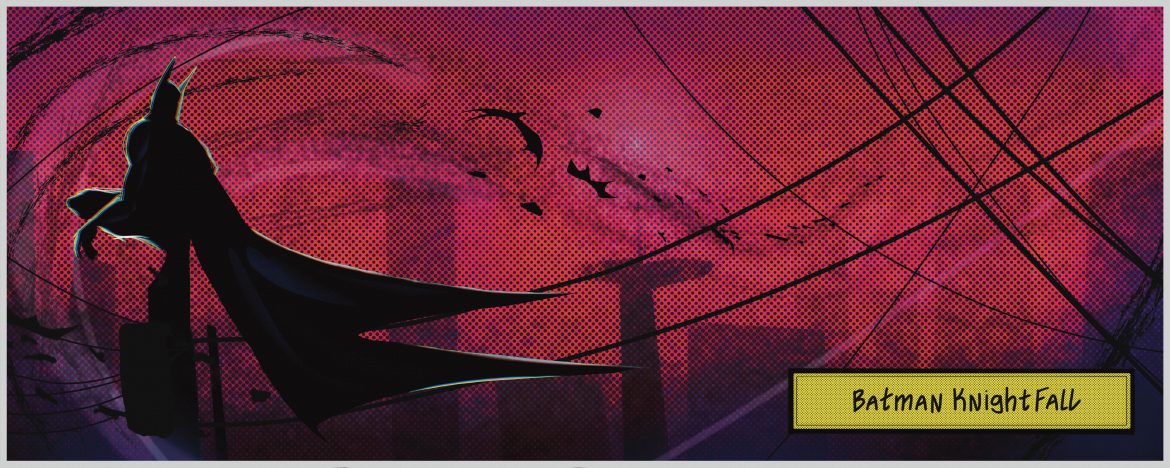
Warner Bros. Animation released “Batman: Knightfall” digitally Aug. 25, followed by a physical release Sept. 8. The animated film adapts the 1990s comic book storyline published by DC Comics and is the first movie in the Knightfall trilogy.
“Gotham City needs Batman” is not an unfamiliar phrase to anyone who has spent time interacting with the Batman mythos. The formula is familiar: Gotham is in distress, the GCPD is unable to handle the situation and Batman swoops in, using his detective skills, gadgets and brute strength to save the day. While that formula can sound cookie-cutter at first, Batman’s rogues gallery and relationships with his allies give each story a different way to challenge him.
“Batman: Knightfall” does an incredible job of taking everything Batman fans know and love about the hero and dialing it up to 100.
Growing up, my entire family was made up of Batman fans. The first celebrities I ever met were Batman actors Kevin Conroy and Adam West. I would sit in my brother’s room for hours watching him try to beat whatever “Batman: Arkham” game had come out that year.
For me, between all the gadgets, punches and Bat-Signals, Batman is at his best when he is at his most human, even when wearing the mask.
The movie opens with human traffickers realizing there is something lurking in the shadows. They immediately assume Batman has caught their operation. The shadowed figure reveals himself as Azrael (Pablo Schreiber) and quickly establishes how different he is from Batman by brutally cutting off one trafficker’s arms, shoving a flaming sword through two others and setting another man’s face on fire.
Before Azrael can kill another trafficker begging for mercy, Batman (Anson Mount) appears and engages him in a fight. Batman repeatedly stops Azrael from killing the traffickers until one runs into the road in a panic and is struck by a truck.
Azrael then has a complete personality shift, as if a possession has been lifted. He drops to his knees in horror, pleading, “Not again,” to himself. He removes his mask, looks up at Batman and sobs, “You have to help me.”
This scene serves as a beautiful introduction to the themes of the film. It is dark, gloomy and riddled with guilt.
The movie then introduces the leading antagonist, Bane, voiced by Michael Mando.
The soon-to-be threatening force of nature starts off as a skinny boy in a remote prison with his mother. The boy, voiced by Noah Mendes and whose name is never stated in either the film or the mainline comics, fantasizes about ruling Gotham after seeing the city in a magazine.
After the death of his mother, the child viciously beats a pedophilic janitor to death. The warden has the boy apprehended and calls him a “bane to all that is holy.” As punishment, the boy is thrown into a pit that sporadically fills with water, with only rats for company.
The little boy eventually becomes the hulking man Batman fans know and fear through years of training in the pit. He is then experimented on with a venom that transforms him into a giant, terrifying figure. After killing the experimenters and the warden, he names himself “Bane” and escapes.
I was unfamiliar with Bane’s backstory before watching this movie, but as I watched, I felt a strong amount of sympathy for the little boy who was made into a monster by his situation.
Shortly after showing his origin, the film depicts Bane breaking into Arkham Asylum and releasing many of Batman’s major villains as part of his plan to “break” Batman.
The rest of the movie follows Bruce’s struggle to maintain himself as he works for days without rest to apprehend the villains causing havoc in Gotham. For Bruce, Batman’s role in Gotham will always come first, above his relationships and even his own health.
The current Robin, Tim Drake (Jack Giffin), and Bruce’s butler, Alfred (Simon Templeman), encourage him to rest. Bruce, however, stands firm. “I can’t give [the Arkham escapees] a break. Not now.”
That is until his exhaustion causes him to nearly beat a serial killer to death. He only stops when Renee Montoya (Jessica Camacho), a GCPD detective, shouts at him to stop.
Although Batman is known for his merciless approach to crime-fighting, he is not known for being unnecessarily cruel. One of the most enduring elements of Batman’s character is his “no-kill” rule.
My favorite Batman mythos dilemma is the struggle with how easy it would be to kill the villains of Gotham. A prime example comes from “Under the Red Hood,” where Bruce admits that if he were to kill someone like the Joker, he knows he would not be able to stop.
“But if I do that, if I allow myself to go down into that place … I’ll never come back,” Bruce says in the comic.
Knightfall’s scene with Bruce almost killing the serial killer shows how easy it would be for him to cross that line while demonstrating how poor his exhausted mental state has become. His exhaustion causes his body to take over, nearly breaking one of his highest guiding principles.
Another fantastic element of this scene is the similarity between Bruce and Jean Paul, the man behind the vigilante Azrael. Once Jean Paul realizes what he has done, he is overcome with guilt. He eventually gets Bruce’s help in deprogramming the brainwashing that led to his violence.
Both Jean Paul and Bruce are unwilling participants in their own brutality. That contrasts nicely with Bane, who is a very willing participant in his own violence.
The rest of the movie does not lack violence or psychological struggles for the Bat. I will refrain from revealing more major plot points and highly suggest that anyone interested in the darker themes of Batman storylines experience the movie themselves.
Tim Drake has always been my personal favorite Robin in the comics, and I rarely get the chance to see him accurately adapted. This film perfectly captures what makes Tim unique as a Robin. He is Batman’s main supporter, besides Alfred, but he is constantly pushed away. In classic Tim Drake fashion, he uses his own cleverness to carry out his plans rather than simply waiting for Bruce’s approval.
The voice acting is another strong point of the film. A particularly impressive moment for me was the voice work from the actors playing the human traffickers at the beginning of the film. Their pleas for their lives felt surprisingly authentic. Mount does a fantastic job as Batman, while Griffin captures Tim’s cockiness perfectly.
Overall, I loved the film and feel that it captures the darker side of the Batman mythos exceptionally well.
The upcoming parts of the trilogy are “Knightquest,” expected to be released later in 2026, and “KnightsEnd,” expected in early 2027.